
Marketing Career Advice from New Balance’s Head of Marketing
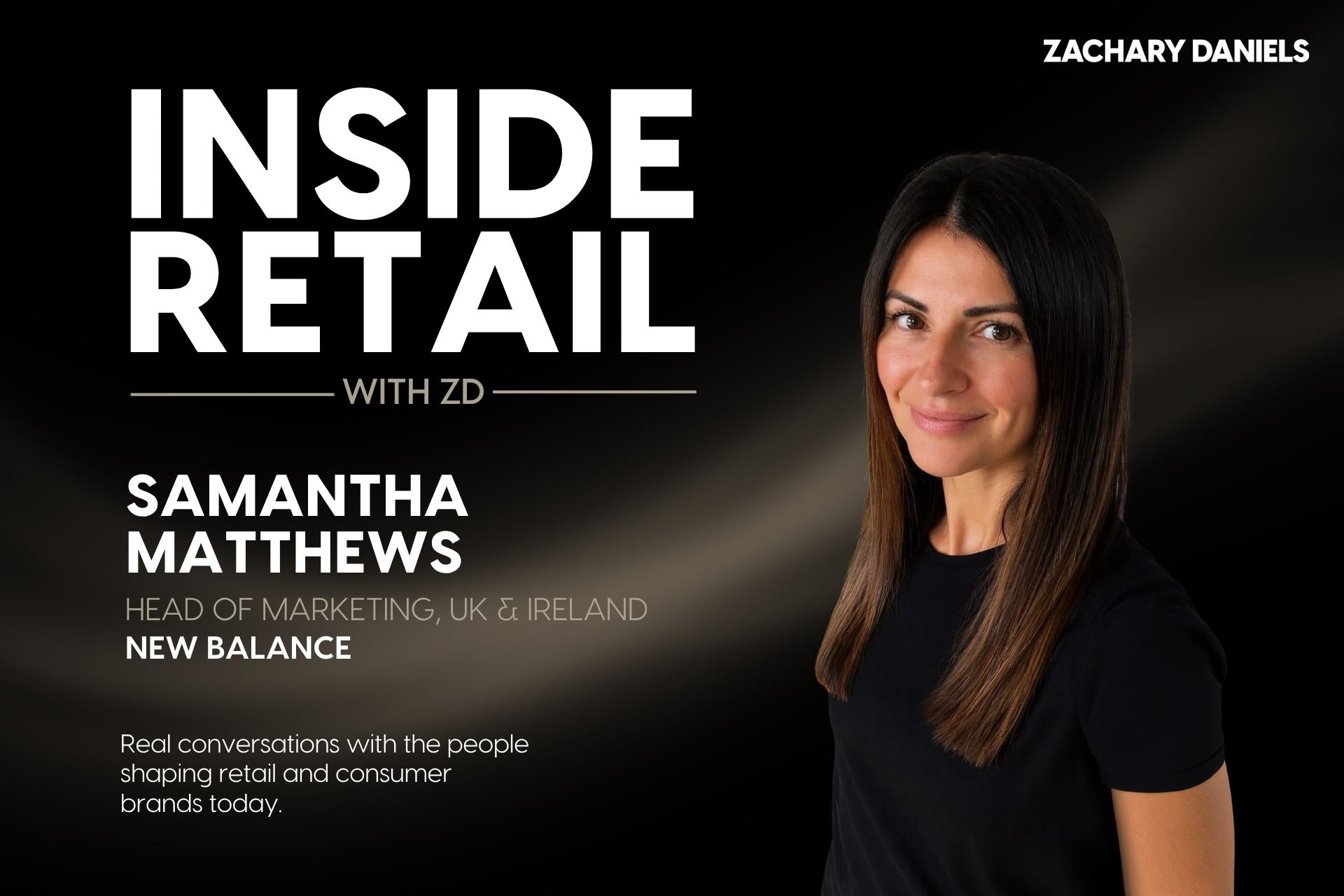
Samantha Matthews is Head of Marketing, UK & Ireland at New Balance. She joined the business in 2007 as a Marketing Coordinator and has spent nearly 20 years building her career from the ground up. We asked her how marketing has changed since she started out, and what she’d tell anyone trying to build a career in it today.
Quick read:
- Who: Samantha Matthews, Head of Marketing, UK & Ireland, New Balance
- In this piece: How retail marketing has changed, where AI fits in, and Samantha’s advice for anyone building a marketing career
Who is Samantha Matthews?
We talk to Marketing Executives and Managers every day who want to know how the industry is changing and what they should actually be doing about it. So we asked someone with a genuinely long view – Samantha has spent almost two decades at New Balance, working her way from Marketing Coordinator to Head of Marketing, UK & Ireland, and now sits on the brand’s Senior Leadership Team.
How retail marketing has changed since she started out
“The biggest shift has been the move towards consumer-led marketing,” Samantha says. “When I started, marketing was often focused on products and channels. Today, consumers are at the centre of everything we do. We have access to more insight, more data and more ways of engaging than ever before.”
That shift means marketers now need to think about the whole journey a customer goes on, not just the campaign in front of them. “Marketers need to think far more holistically about the entire consumer journey,” she says.
Digital, community and partnerships – what actually matters now
Digital has transformed how brands reach people, but Samantha is just as clear that it isn’t the whole story. “Consumers want real connections and meaningful experiences, not just advertising messages,” she says. “The brands that successfully build communities and create genuine relationships with consumers are often the ones that win in the long term.”
That’s a theme we hear constantly from clients too – genuine partnerships and community-building are increasingly what separates a brand people notice from one they actually trust.
Where AI fits into all of this
Like most senior marketers we speak to, Samantha expects artificial intelligence to keep changing how the industry works. “AI is obviously going to continue changing the industry and creating opportunities to improve efficiency, insights and personalisation,” she says.
But her genuine conviction is that this makes the human side of marketing more important, not less. “Community, authenticity, experiences and meaningful brand connections will continue to differentiate brands in an increasingly digital world,” she says. “Most importantly, marketers need to remain adaptable. The industry evolves constantly, and continuous learning will become even more critical.”
“The industry evolves constantly, and continuous learning will become even more critical.”
Samantha’s career advice for marketers
We asked Samantha what she’d actually tell someone building a marketing career today — not the generic version, the real one.
Develop breadth, not just depth. “Develop expertise in your specialism, but also spend time understanding areas such as finance, commercial planning, retail, partnerships and broader business operations.”
Keep learning, deliberately. Samantha is currently around two years into an MBA via the apprenticeship route, something New Balance has supported her through. “It has genuinely transformed the way I think as a leader. I’ve developed stronger strategic thinking, become more commercially aware and gained confidence in my decision-making.” Her wider point applies whether or not you pursue a qualification: “No matter how much experience you have, there’s always something new to learn. When you think you’ve made it, that’s often when learning becomes most important.”
Focus on the work, not the title. This is the mistake she sees most often. “Sometimes people become too focused on the next title rather than mastering their current role. Progression comes from delivering results, building strong relationships and developing expertise over time. Career growth is usually a by-product of consistently performing well rather than chasing promotions.”
Say yes to the harder opportunity. “Volunteer for projects, build relationships across the business, and be willing to support areas outside your immediate responsibilities. The broader your experiences early on, the stronger your foundation will be later in your career.”
ZD Perspective
We hear this from candidates all the time: a lot of marketers assume the skills that got them their first role are the skills that’ll carry them to the top. Samantha’s take is a good reality check – the technical side of marketing keeps changing, but curiosity, commercial awareness and genuine adaptability are what actually compound over a career. If you’re only investing in the tools and platforms of the moment, you’re building on the part of the job that’s guaranteed to change fastest.
Download the Marketing, Digital & Tech Salary Guide
Quick fire with Samantha
Best career advice she’s received? Control what you can control, and focus your energy there.
One marketing skill everyone should master? Communication.
One habit that’s helped her career? Staying curious and never stopping learning.
Samantha’s route to Head of Marketing started with the same job titles a lot of the people we speak with hold today. If you’re building your own path in marketing, digital or ecommerce, we’d love to help you get there.
FAQs
Is AI going to replace marketing jobs?
Unlikely to replace the role outright, but it is changing what parts of the job involve. Senior marketers like Samantha expect AI to improve efficiency and personalisation, while human skills — authenticity, community, brand judgement — become more valuable, not less.
What skills should marketers focus on developing?
Curiosity, commercial awareness and adaptability, alongside genuine breadth across areas like finance, commercial planning and partnerships — not just depth in a single specialism.
Do you need an MBA to progress in a marketing career?
No – an MBA isn’t a requirement, but many senior marketers, including Samantha, find it valuable for developing strategic thinking and commercial confidence later in their career.
< Back to list


