
How to Become a Head of Marketing: Leadership Lessons from New Balance
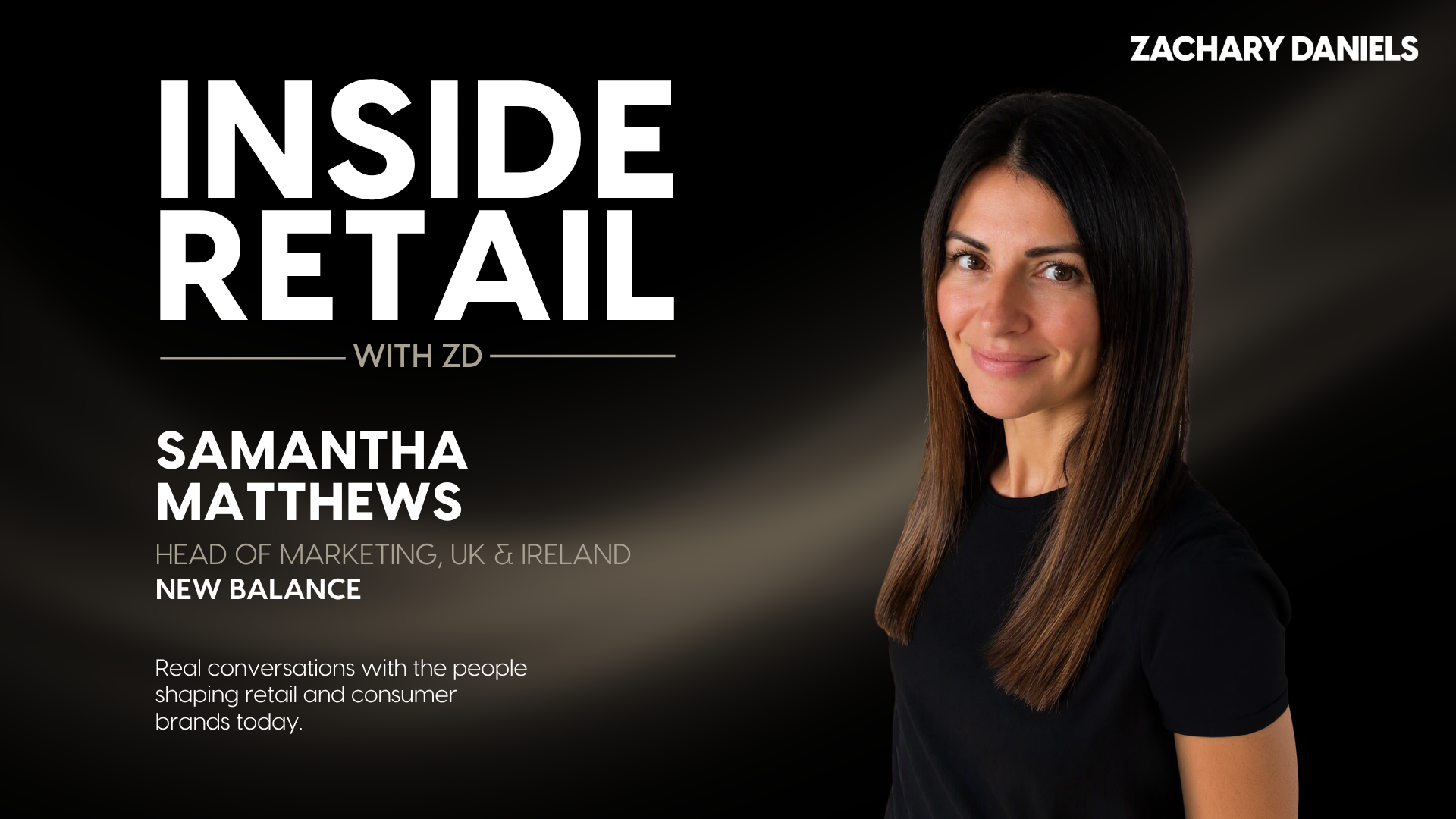
Inside Retail with ZD. Real conversations with the people shaping retail today.
Samantha Matthews is Head of Marketing, UK & Ireland at New Balance, and sits on the brand’s Senior Leadership Team. She joined as a Marketing Coordinator in 2007 and spent nearly 20 years working her way up. Here’s how she actually got there – and what she looks for in the people she hires and develops.
Quick read:
- Who: Samantha Matthews, Head of Marketing, UK & Ireland, New Balance
- In this piece: The moves that built her career, what leadership actually looks like day to day, and what she looks for when hiring
- Read next: Marketing Career Advice from New Balance’s Head of Marketing – her take on where the industry’s heading
The moves that actually built her career
Samantha’s route to Head of Marketing wasn’t a straight line up the ladder. It was nearly two decades of deliberately broadening her experience – Trade Marketing Manager, Marketing Manager, Senior Marketing Manager, then Head of Marketing.
“Rather than simply completing my day-to-day responsibilities, I looked for opportunities to contribute more broadly, solve problems and support the wider business,” she says. “I also made a conscious effort to understand the commercial side of marketing, because as you become more senior, understanding how marketing impacts business performance becomes increasingly important.”
The projects that accelerated things fastest were the big, complicated ones – large-scale partnerships with organisations like Liverpool FC, England Cricket and the London Marathon. “These projects exposed me to senior stakeholders, significant budgets and multiple marketing disciplines simultaneously. They forced me to think strategically while also ensuring strong execution.”
One campaign stands out above the rest: the Runaway Pub, a pop-up where runners earned pints based on the miles they’d run. “What made it special was the level of integration,” she says. “It combined experiential marketing, PR, digital activation, social engagement and brand storytelling into one connected campaign.” It was shortlisted for a Cannes Lions Award, and the lesson has stuck with her since: “The strongest campaigns aren’t built around channels; they’re built around ideas.”
“Some of the best moves I’ve made weren’t planned years in advance. They came from being prepared, being curious and being willing to take on new challenges when the opportunity presented itself.”
What leadership actually looks like day to day
Becoming Head of Marketing changed the shape of Samantha’s job more than any promotion before it. “Earlier in my career, the majority of my time was spent executing campaigns and delivering projects,” she says. “Today, my role is much more focused on strategy, leadership, planning and decision-making. I spend a lot of time thinking about the longer-term direction of the brand, developing people and ensuring the team has the support and clarity needed to succeed.”
What surprised her most about leading a team wasn’t strategy at all – it was how much of the job is genuinely about people. “I’ve learned that a huge part of leadership is coaching, supporting and developing others. Helping people grow and watching them achieve things they didn’t think were possible is one of the most rewarding elements of the role.”
She’s also candid that a significant part of the role happens away from a desk. “Some of the best insights come from being out with consumers, partners and teams rather than sitting in meetings. Those relationships and interactions help shape better decisions and stronger marketing.”
What she looks for when she’s building a team
This is the part we get asked about constantly by candidates hoping to move up, so we pushed her directly.
Curiosity comes first, every time. “Marketing changes incredibly quickly, so I look for people who are eager to learn, adaptable and genuinely interested in understanding consumers and culture. Technical skills can be taught, but mindset is often what separates good marketers from great ones.”
Potential isn’t about experience – it’s about ownership. “People who actively seek opportunities, ask thoughtful questions and continuously look to improve themselves tend to stand out. Potential isn’t necessarily about experience; it’s often about attitude and willingness to learn.”
And the people who go furthest share a genuinely proactive mindset. “They anticipate challenges, seek solutions and consistently look for ways to add value. They don’t wait to be told what to do and they take ownership of outcomes.”
Her advice if you’re aiming for a leadership role
- Take ownership before you have the title. The behaviours that get noticed for promotion – solving problems beyond your remit, supporting the wider business – are things you can start doing right now, not once you’re given permission.
- Build commercial understanding early. Understanding how your work impacts business performance is what separates a good individual contributor from someone ready to lead.
- Get comfortable with big, messy projects. The complex, cross-functional campaigns are where leadership muscle actually gets built.
- Remember it’s about people. “Success comes through your team, not through doing everything yourself” – a lesson worth learning long before you have direct reports.
ZD Perspective
We’re seeing this play out constantly in the briefs we take. Clients tell us they’d rather promote someone showing genuine ownership and curiosity than someone with slightly stronger technical skills but a narrower view of the business – and candidates who are ready to move into leadership are usually the ones who’ve already been acting like a leader before the title arrived. Samantha’s story is a strong example of exactly that pattern.
Quick fire with Samantha
Biggest lesson she’s learnt as a leader?
Success comes through your team, not through doing everything yourself.
Favourite campaign she’s worked on?
The Runaway Pub.
Samantha built her way to Head of Marketing through ownership, curiosity and a willingness to take on the harder brief – not a five-year plan. If you’re building towards a leadership role in marketing, digital or ecommerce, we’d love to help you get there.
FAQs
What does it take to move from Marketing Manager to Head of Marketing?
Based on Samantha’s experience, it’s less about a specific move and more about consistently taking on broader responsibility, understanding the commercial side of the business, and building genuine ownership over outcomes beyond your immediate role.
How do I build leadership skills before I have a management title?
Take ownership of problems beyond your formal remit, mentor colleagues informally, and be willing to make a case for a decision rather than just executing instructions — the behaviours senior leaders consistently say they noticed before they gave someone the title.
What do senior marketers look for when hiring or promoting?
Curiosity, ownership and a proactive mindset come up repeatedly – technical skills can be taught, but mindset is what tends to separate good marketers from great ones.
Read Part One: Marketing Career Advice
< Back to list


