
How to Become a People Director: Career Advice from The Very Group’s Robyn Richards
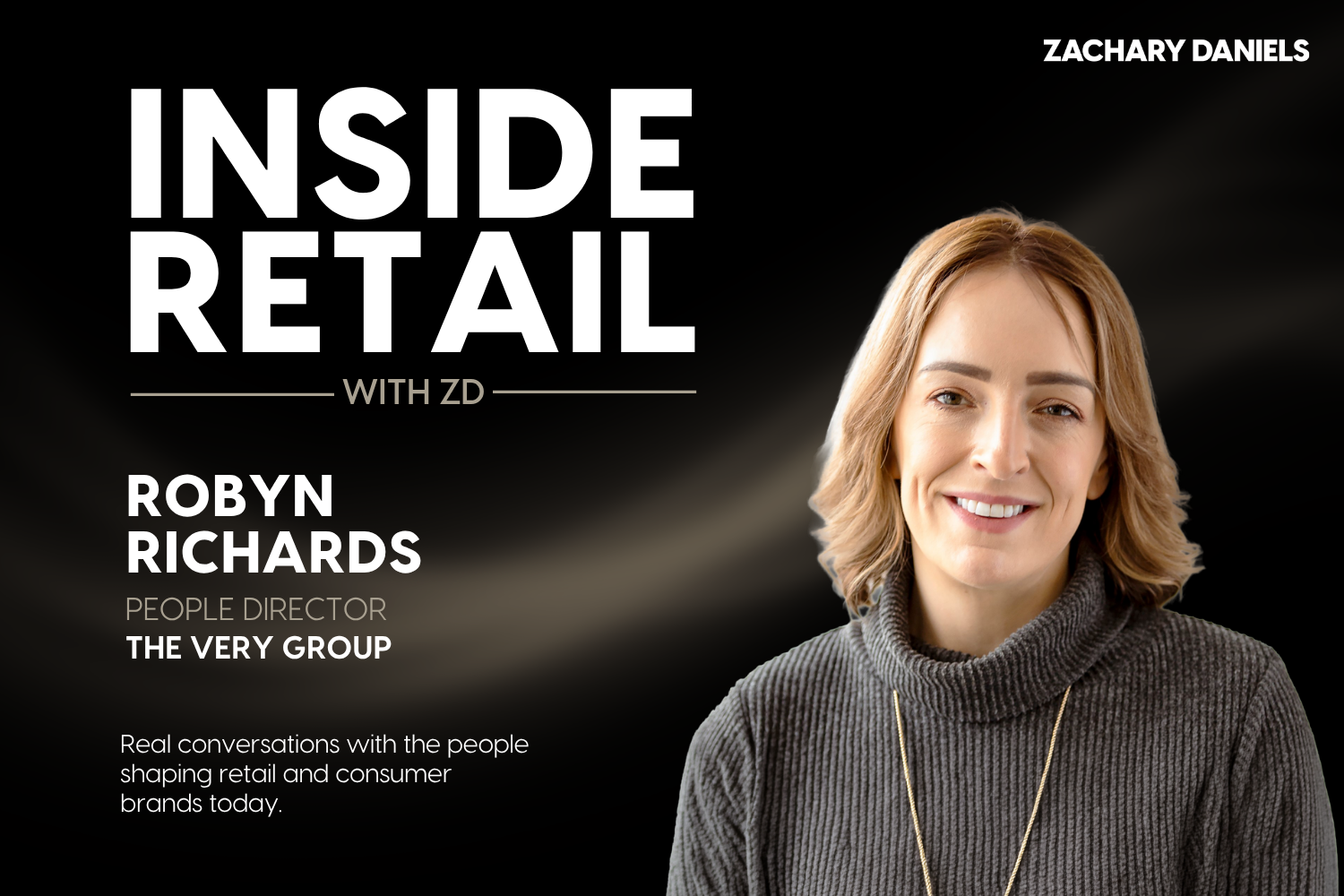
Robyn Richards is People Director at The Very Group. Her career has taken her from Learning & Development at Pets at Home, through 11 years at JD Sports, to becoming People Director at Very within eight months of joining. We asked her what it really takes to progress into senior HR leadership, why commercial understanding matters and what skills the next generation of People Directors will need.
Quick read:
- Who: Robyn Richards, People Director, The Very Group
- In this piece: How to become a People Director, developing commercial HR skills, progressing into leadership and how AI is changing the People profession.
What does it take to become a People Director?
There isn’t one set career path to becoming a People Director. Robyn Richards describes hers as “squiggly”, having started in Learning & Development before moving into recruitment, talent, organisational design and People partnering.
During her 11 years at JD Sports, she deliberately put herself forward for opportunities that stretched her beyond her existing role.
I never said no to anything in my career. If something came up and somebody said, ‘Who wants to be involved in this?’ I’d say, ‘I’ll do it.’ I might not know anything about it, but I’ll find out.
Her advice for anyone aspiring to senior HR leadership is to build experience beyond their immediate specialism, understand the wider business and actively take ownership of their development.
Why commercial understanding matters in HR
For Robyn, one of the biggest differentiators between a good HR professional and a future People Director is commercial awareness.
What has stood me apart is my commerciality. I understand how a business makes money. I understand how it’s going to make money three years from now.
She believes HR professionals need to understand much more than employment legislation and People processes. They need to understand customers, financial performance, technology, business strategy and what individual functions are trying to achieve.
Prioritise understanding the business first and then align HR to that business strategy.
It’s particularly important for anyone looking to move from HR Advisor into an HR Business Partner role.
Being an HR Business Partner is not a time-served role.
Robyn believes the strongest HR Business Partners understand their business areas so well that they could almost work within them themselves. That knowledge allows them to build stronger relationships, influence decisions and create People plans that genuinely support commercial objectives.
How to progress your career in HR
Robyn has never been afraid to make her career ambitions known.
I’ve been quite comfortable going, ‘I want your job. What are my gaps? What are you going to do for me and what am I going to do for you?’
But she’s equally clear that wanting a promotion isn’t enough.
You are entitled to nothing. Everything has to be earned.
Her approach to career progression has been built around three things:
Ask for opportunities. Don’t wait until somebody offers you a bigger role or project. Put yourself forward for work that will develop your experience.
Be open to feedback. Understand what is holding you back and take responsibility for improving it.
Build relationships across the business. The more you understand the people, challenges and priorities around you, the more valuable you become.
For Robyn, progression comes from demonstrating that you’re ready for the next level, often before you have the job title.
What changes when you become a People leader?
One of Robyn’s biggest lessons has been learning that leadership doesn’t mean being involved in everything. Earlier in her career, saying yes created opportunities. As a People Director, she’s had to become more selective about where she spends her time.
I see leaders who think great leadership means having to be in every single meeting, at every single table, and having to say something in every meeting. I fundamentally disagree with that.
Instead, she focuses on where she can add the most value and where giving somebody else an opportunity will help them develop. She’s also deliberate about recruiting people who are stronger than her in their specialist areas.
I’ve made it my thing to recruit brilliant teams wherever I’ve gone and recruit people who are better than me in that particular subject area.
Her leadership philosophy is simple: “High expectations, high support.” Give people ownership, support them to succeed and make sure they receive recognition for their work.
What skills will future People Directors need?
When we asked Robyn what she would prioritise if she were building the skillset of a future People Director today, her answer was:
AI literate, with an agile mindset.
At The Very Group, AI is already influencing how teams work, the skills they need and how the business approaches change. Robyn believes People leaders have two responsibilities: understanding how AI can improve their own function and supporting the wider organisation through changes to roles, skills and ways of working.
We have to lead from the front.
But she’s clear that successful AI adoption isn’t simply about introducing new technology. It’s about understanding where it adds value, helping colleagues build confidence, putting the right governance in place and measuring the commercial benefits.
What can we afford? What makes the biggest difference to customers and colleagues? What can we do with the resource, technology and governance we have today?
For future People Directors, that means combining commercial understanding and People expertise with the ability to adapt, learn and lead through uncertainty.
ZD Perspective
We speak to HR and People professionals across retail and consumer businesses every day, and Robyn’s experience highlights an important point about career progression.
Technical HR knowledge is essential, but it’s rarely enough on its own to move into senior People leadership. The professionals who stand out are often those who can demonstrate how their work supports business performance, build credible relationships with senior stakeholders and understand the commercial challenges facing the organisation.
And as AI changes how businesses operate, the ability to navigate change and develop future skills will become increasingly important. For anyone aspiring to become a People Director, the opportunity is to start developing those capabilities now, rather than waiting until you’re applying for the role.
Quick fire with Samantha
What should aspiring People Directors focus on? Understanding how the business makes money and how People strategy supports its goals.
What’s one leadership lesson she’s learned? You don’t have to be in every meeting or have an immediate answer to every question.
What skills will future People Directors need? AI literacy and an agile mindset.
What’s her biggest piece of career advice? “You are entitled to nothing. Everything has to be earned.”
Robyn’s career shows that becoming a People Director isn’t simply about progressing through HR job titles. It’s about developing commercial understanding, building relationships, taking opportunities and learning how to lead others.
At Zachary Daniels, we work with HR and People professionals across retail and consumer, helping people take the next step in their careers and businesses build the teams they need to grow.
If you’re thinking about your next move in HR or looking to strengthen your People team, we’d love to hear from you.
FAQs
How do you become a People Director?
There isn’t one fixed route. Experience across HR business partnering, talent, organisational design, leadership and commercial strategy can all help. Developing an understanding of how the business operates and building strong stakeholder relationships are particularly important.
What skills does a People Director need?
Alongside HR expertise, People Directors need commercial awareness, strategic thinking, leadership, communication, stakeholder management and the ability to manage organisational change. AI literacy and adaptability are also becoming increasingly important.
How do you move from HR Advisor to HR Business Partner?
Moving into HR business partnering requires more than experience handling employee relations cases. You need to understand the commercial priorities of the business areas you support and demonstrate how People initiatives can help achieve those objectives.
How is AI changing the role of HR and People leaders?
AI is creating opportunities to improve productivity, recruitment, learning and colleague experiences. People leaders also have an important role in helping businesses identify future skills, manage changes to roles and support employees through technology adoption.
< Back to list


